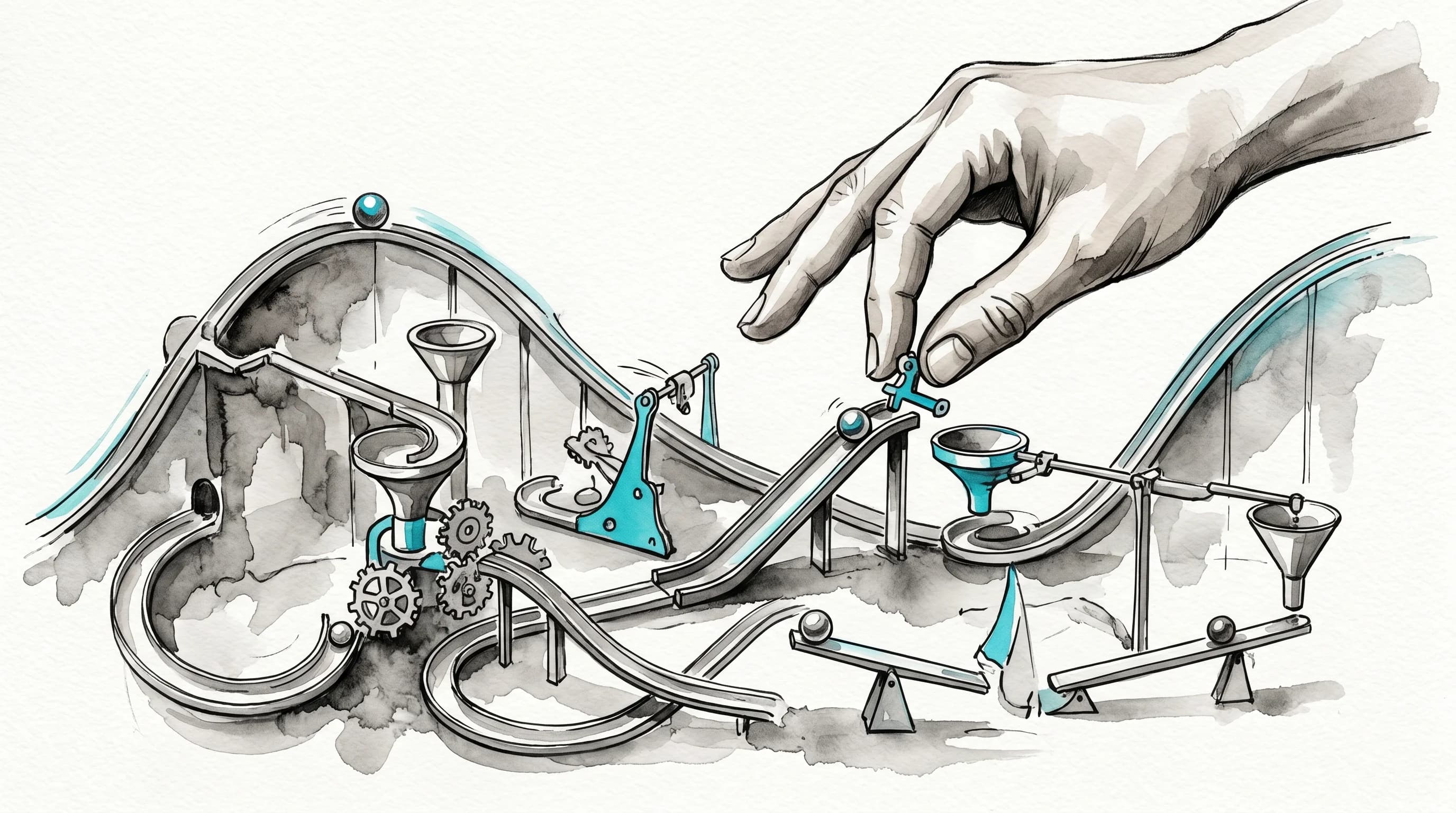
Proof of Human Thumbnails: Why Authenticity Beats AI on YouTube
Viewers have AI fatigue and YouTube's algorithm knows it. What the Proof of Human thumbnail trend means for your CTR in 2026.

Something shifted on YouTube this year. Creators who spent months perfecting their AI thumbnail workflows are quietly switching back to real photos. Channels that never left authentic imagery are seeing their CTR climb without changing anything else.
The trend has a name: Proof of Human. And it is reshaping how the best creators think about thumbnails in 2026.
I have been tracking this shift closely while building Hooksnap, and the data tells a clear story. Pure AI thumbnails had their moment, but viewer behavior and YouTube's algorithm are now actively rewarding authenticity. Here is what that means for your channel — and how to adapt without throwing AI tools out entirely.
What Is the "Proof of Human" Trend?
Proof of Human (POH) describes a design philosophy where thumbnails deliberately include markers of human involvement. Real skin textures. Candid micro-expressions. Hand-drawn overlays. Slightly imperfect compositions that could only come from a person behind the camera.
This is not about being anti-technology. It is about responding to a specific problem: viewers have developed what researchers call "AI fatigue." After two years of increasingly polished, synthetic-looking thumbnails flooding their feeds, people have learned to scroll past anything that looks too perfect.
The numbers bear this out. According to ThumbnailTest's analysis of AI thumbnails, pure AI-generated thumbnails suffer a 42% visibility penalty compared to human-created alternatives. Meanwhile, thumbnails featuring genuine human micro-expressions achieve 22% higher long-term click satisfaction rates (BananaThumbnail).
That satisfaction metric matters more than ever, because YouTube's algorithm is watching it closely.
Why the Algorithm Cares About Authenticity Now
YouTube made a fundamental shift in how it ranks content. The platform no longer optimizes purely for what gets clicked — it optimizes for what leaves viewers satisfied after clicking (Outfy).
YouTube CEO Neal Mohan stated that the platform is "doubling down on labeling and transparency" around AI content because "real feels best." The algorithm now measures post-click satisfaction through surveys, shares, and repeat viewership patterns.
Here is why this matters for thumbnails specifically: a misleading or overly synthetic thumbnail might get an initial click, but if the viewer feels tricked — even subconsciously — they bounce. That bounce sends a signal. According to Outfy's data, misleading thumbnails cause a 40% audience loss within the first 30 seconds, and the algorithm directly penalizes this pattern.
The 2026 Browse feed personalization overhaul made this even more pronounced. Your thumbnails now compete against a smaller, more targeted set of videos in each viewer's feed (OutlierKit). Standing out in a personalized feed requires clarity and trust, not just visual spectacle.
The Data: AI vs. Human vs. Hybrid Thumbnails
Let me be specific about what the performance data actually shows, because the picture is more nuanced than "AI bad, human good."
Pure AI thumbnails can provide an initial 1.2 percentage point CTR boost in the first few days after upload. But that advantage erodes quickly. Within two to three weeks, pure AI thumbnails typically suffer a 0.7 to 2.3 point CTR drop as the algorithm adjusts for satisfaction signals (BananaThumbnail).
Pure human thumbnails with authentic expressions start slower but maintain performance. They achieve 22% higher long-term click satisfaction compared to their AI equivalents. Brands using human-proof thumbnails are seeing 49% faster revenue growth on the platform.
Hybrid thumbnails — combining AI-generated backgrounds or enhancements with real human elements — consistently outperform both extremes. Hybrid approaches achieve roughly 2x the CTR of pure AI, according to BananaThumbnail's trend analysis.
The takeaway is not that AI is useless for thumbnails. The takeaway is that AI works best as a tool to enhance human authenticity, not replace it.
Stop guessing. Start testing thumbnails.
Paste any YouTube URL and get AI-branded thumbnails in under 60 seconds. Free to try.
Try Hooksnap FreeThe Trust Crisis Behind the Trend
The Proof of Human movement did not emerge in a vacuum. It is a direct response to a measurable trust crisis around AI-generated content.
A Raptive survey of 3,000 U.S. adults found that consumer trust drops approximately 50% when content is perceived as AI-generated, regardless of whether it actually is. Only 41% of Americans believe online content is both accurate and human-made.
On YouTube specifically, between 21% and 33% of content in fresh user feeds now consists of AI-generated material, often described as "AI slop" (Kapwing). One in five Shorts that YouTube recommends to new users falls into this category. Viewers are not blind to this — they are actively developing detection heuristics.
Meanwhile, trust in user-generated content has moved in the opposite direction. The Edelman Digital Trust Barometer reported that consumer trust in UGC climbed to 88% in 2025, up from 84% the year before. And 68% of YouTube users specifically trust content posted by regular people over polished productions (Amra & Elma).
This trust gap between AI-generated and human-created content is the fundamental force driving the Proof of Human trend.
What Top Creators Are Actually Doing
The best creators are not abandoning AI tools. They are using them differently.
MrBeast's team sets aside dedicated time to shoot specifically for thumbnails — not pulling random frames from video footage, but creating shots made specifically for maximum impact. They produce 10 to 20 thumbnail variations per video and swap them based on performance data (Touhfa). The key detail: every variation features a real photo with an authentic (if exaggerated) expression. AI assists with background generation and color grading, but the human face is always real.
Their 2026 design evolution leans heavily into what they call "environmental text" — text that looks discovered rather than designed. Think "DAY 29" carved into actual dirt, not a clean graphic overlay. This approach signals authenticity at a glance.
The neo-minimalist movement is another manifestation of POH. Creators are stripping thumbnails down to fewer than three focal points with heavy negative space. This works because it is the visual opposite of the cluttered, AI-generated thumbnails that flood feeds. According to Unkoa's design analysis, switching from cluttered, text-heavy designs to clean neo-minimalist style produces an immediate 15-20% bump in mobile clicks.
Gaming and tech creators are leading the charge. Red thumbnails average a 7% CTR compared to under 5% for low-contrast alternatives. But the real differentiator is faces: thumbnails featuring strong emotional expressions boost CTR by 20-30% across all niches (Awisee).
A Practical Framework for Proof of Human Thumbnails
Based on what is working right now, here is a framework you can apply to your own thumbnails.
1. Shoot Dedicated Thumbnail Photos
Stop pulling frames from your video footage. Set up a quick thumbnail shoot before or after filming. You need good lighting, a clean background (or one you will replace), and 5-10 photos with different expressions. This single change separates channels that grow from channels that stall.
2. Use AI for Enhancement, Not Replacement
AI excels at background removal, upscaling, color correction, and contrast enhancement. Use it for those things. Do not use it to generate the central human element of your thumbnail. Tools like Hooksnap let you generate professional thumbnail concepts while keeping your authentic expression as the anchor.
3. Add Deliberate Imperfections
This sounds counterintuitive, but it works. A slightly asymmetric composition, a hand-drawn arrow, or environmental text that looks organic rather than designed — these signals tell viewers "a real person made this." Predictions suggest that 65% of top-performing thumbnails will feature these "sincere imperfections" by end of 2026.
4. Test Your Authenticity Level
Not every niche responds identically to POH signals. Gaming audiences may tolerate more AI enhancement than vlog audiences. The only way to know is to A/B test your thumbnails systematically. Run at least 1,000 impressions per variant before drawing conclusions, and test for two to four weeks to capture satisfaction signal effects.
5. Optimize for Mobile First
Seventy percent of YouTube views happen on mobile devices. Your thumbnail needs to communicate its message — and its authenticity — on a screen roughly the size of a postage stamp. The common mistakes that kill CTR almost all become worse on mobile: small text, cluttered compositions, low contrast colors.
6. Match Your Thumbnail to Your Content
The algorithm penalty for misleading thumbnails has never been steeper. Your thumbnail promise must match the video delivery. If your expression in the thumbnail is shocked, the content better deliver something genuinely surprising. This is where many AI-generated thumbnails fail — they create expectations the video cannot satisfy.
The Hybrid Workflow That Actually Works
Here is the workflow I recommend based on the data:
Step 1: Concept. Decide what emotion and story your thumbnail needs to tell. Use AI tools to generate concept variations — this is where AI thumbnail generation adds real value. Hooksnap's template system is useful here for keeping your thumbnail style consistent across this workflow.
Step 2: Shoot. Take 5-10 dedicated thumbnail photos matching your strongest concept. Focus on authentic expression.
Step 3: Enhance. Use AI to process the background, adjust colors, improve composition, and handle technical polish. Keep the human element untouched.
Step 4: Compose. Add text, branding, and overlays. Err toward minimal. One piece of text, one face, one background element.
Step 5: Test. Upload two to three variants. Let the data decide. Swap underperforming thumbnails after 48-72 hours if you have enough impressions.
This workflow gets you the efficiency benefits of AI tools without triggering the authenticity penalties that pure AI thumbnails now face.
Keep reading:
What This Means for Your Channel Going Forward
The Proof of Human trend is not a fad. It is a structural response to viewer psychology and algorithm design. As AI-generated content continues to flood YouTube — remember, up to a third of recommended content is now AI-generated — the premium on human authenticity will only increase.
Channels that figure out the hybrid approach early have a significant first-mover advantage. You get the speed and creative range of AI tools combined with the trust and satisfaction signals that authentic human elements provide.
The creators who will struggle are the ones who go all-in on either extreme: fully manual workflows that cannot keep up with production demands, or fully AI-generated thumbnails that viewers are learning to ignore.
Start with one change. Shoot dedicated thumbnail photos for your next video. Compare the CTR against your usual approach. The data will tell you everything you need to know about where your audience stands on the Proof of Human spectrum.
Building thumbnails that balance AI efficiency with human authenticity is exactly what we designed Hooksnap to do. Our pipeline generates professional thumbnail concepts powered by AI while keeping your authentic expression and branding at the center. Try it free — 10 generations, no credit card required.
See how Hooksnap creates click-worthy thumbnails
AI-powered thumbnail generation that helps your YouTube videos get more clicks.
View PlansReady to boost your CTR?
Stop losing clicks to boring thumbnails. Get AI-generated thumbnails in under 60 seconds.
Get Started Free