How to Build a Sustainable YouTube Production Workflow (Without Burning Out)
63% of creators report burnout. Here's the batch production system that works: realistic posting frequency, workflow automation, and the changes that prevent creator burnout.
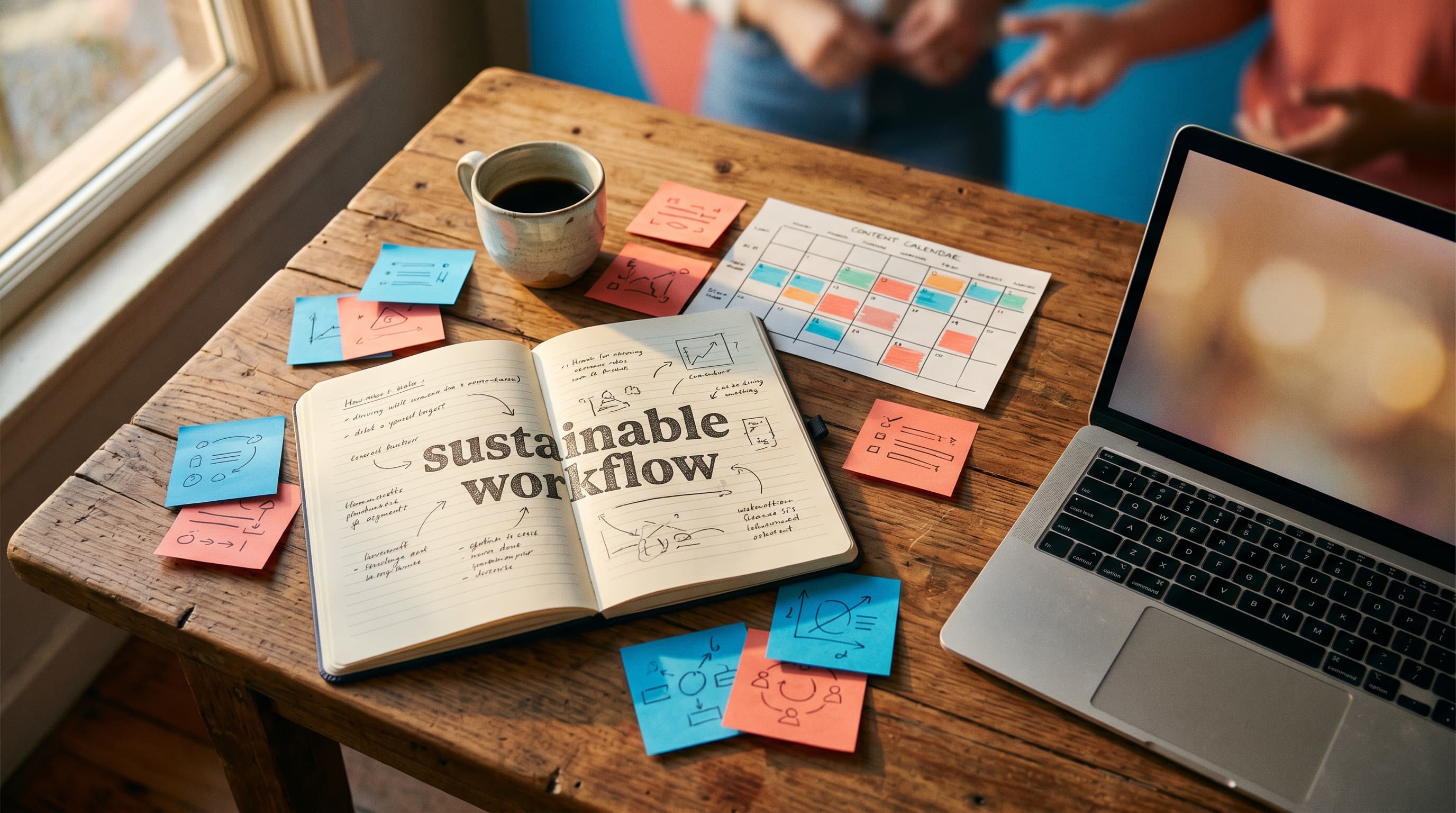
You know what kills more YouTube channels than bad thumbnails or low CTR? Creator burnout.
63% of US creators report experiencing burnout symptoms, according to a 2025 survey. Not stress. Not occasional overwhelm. Actual burnout—the kind that makes you dread opening Final Cut and ditch the channel entirely.
The culprit isn't the algorithm (though it's partially to blame). It's posting frequency that exceeds what's actually sustainable. And here's the brutal math: creators who exceed their natural sustainable posting frequency by 50% experience 3.5x higher burnout rates.
This doesn't mean "post less." It means engineer your workflow so you post what you actually can sustain.
Let me walk you through the system that works.
The Problem: Posting Frequency Mismatch
Here's how it typically plays out:
You launch your channel with ambition. "I'll post 3 videos weekly," you think. For month one, you crush it. Month two, life happens—you're still posting but it's 11 PM edits. Month three, you skip a day. Your analytics tank. Panic sets in. You work harder to catch up.
Within six months, your sustainable posting frequency (the pace you can actually maintain indefinitely) has nothing to do with your target posting frequency. You're operating on fumes.
The research is clear: creators who exceed their sustainable pace by 50% or more become 3.5x more likely to experience burnout. And at 75% over, it's not "burnout"—it's exit velocity.
The Data-Backed Solution: Batch Content Creation
The #1 strategy that works: batch creation.
Instead of producing one video per week (spread across 7 days of planning, shooting, editing, uploading), you shift to batching: filming and editing 4-8 pieces of content in a compressed 1-2 day window, then scheduling them across 2-4 weeks.
Here's what changes:
Before batching:
- Monday: ideate
- Tuesday-Wednesday: shoot (when you have time)
- Thursday-Friday: edit (late nights, usually)
- Saturday: upload and optimize
- Repeat
After batching:
- One intensive 2-day sprint every month
- Film 4-8 videos at once (same lighting setup, wardrobe, B-roll, mental state)
- Edit in focused batches
- Schedule drops for the next month
- 3-4 weeks of actual breathing room
The payoff: you spend 4-6 hours of actual production time instead of 14-16 spread across the week. More importantly, you get real breaks.
How to Actually Build This Workflow
Step 1: Identify Your Realistic Posting Frequency
Not your goal frequency. Not what "successful creators" in your niche do. Your actual sustainable frequency.
If you're working a full-time job, 1 video weekly is realistic. If you're managing a team, 2-3 weekly might work. If you're full-time solo, 3-5 weekly is the ceiling for most creators.
Being honest here saves everything downstream.
Step 2: Plan Your Batch Calendar
Work backward from your posting schedule.
- Target: 1 video weekly
- Batch size: 4 videos (covers a month)
- Batch frequency: Once monthly
- Time commitment: 2 days per month in "production mode," 26 days in normal life
Pick two days next month. Block them. Treat them like client calls—immovable.
Step 3: Prepare the Batch Workspace
This is where consistency compounds.
- Same location (same lighting = less setup time)
- Same wardrobe options (you'll recognize what works on camera)
- Same B-roll environment (shoot all your intros, transitions, B-roll in one location)
- Same equipment (battery charge, test mic levels once)
One creator reported cutting production time by 45% just by setting up a permanent shooting station instead of reconfiguring the space for each video.
Step 4: Structure Recording Sessions
Batch your recording by type, not by video:
- Hour 1-2: All intros (8 intros in one take, different angles/variations)
- Hour 3-4: All main content (record once, angle-shift for B-roll)
- Hour 5-6: All outros and calls-to-action
This sounds mechanical. It is. And that's the point. You're not creative during a batch day—you're efficient. Creativity happens during the planning phase (which is now spread across the month).
Step 5: Stagger Editing
Don't edit all 4 videos in one sitting.
- Day after batch: Rough edit 2 videos, let your brain rest
- 2 days later: Final edit 2 videos, add effects
- Next day: Thumbnail batch (all 4 at once—same brand settings, text styles)
- Next day: Upload + optimization
Spreading editing prevents the "edit blur" where you stop seeing what actually looks good.
The Underrated Ingredient: Diversified Revenue
Here's what most productivity advice misses: financial instability drives unsustainable work pace.
When your income fluctuates 30-60% month-to-month (purely from ad revenue variance), you panic during slow months and work harder to "catch up." This is the invisible driver of burnout.
The fix: diversify revenue away from pure ad revenue.
- Channel memberships ($4.99-99.99/month) provide predictable recurring income
- Sponsorships create "good months" you can count on
- Digital products (courses, templates) decouple income from posting frequency
Even $1,000/month in recurring revenue shifts your brain state. You're no longer in "survive" mode. You can post sustainably.
The 90-Day Reality Check
After implementing this, most creators report:
- Week 1-2: Weird feeling of "what do I do in my free time?" (this is healthy)
- Week 3-4: First batch completes, 4 videos drop on schedule, viewers don't notice the workflow change
- Month 2: Mental clarity returns, you're actually thinking about content strategy instead of editing late at night
- Month 3: You realize you have ideas again
The highest-signal metric: 3 months in, you're still posting consistently and you've actually turned off editing software for days at a time.
Why This Matters for YouTube in 2026
The creator economy is maturing. The "grind 24/7" YouTubers of 2015-2020 are done. They're either burned out or they've already shifted to sustainable systems.
The winners in 2026 aren't grinding harder. They're engineering systems that let them post consistently without sacrificing mental health.
Batch content creation is the same system that powers Netflix production (which doesn't film episodes weekly), podcasting networks (which batch-record monthly), and any sustainable media operation.
Your YouTube channel isn't different. It's just smaller.
The Quick Implementation: Your First Batch
Pick a date 2-3 weeks from now. That's your first batch day.
Plan 3-4 videos you'll make that day. Choose topics you're confident about (not new experiments). Get a friend to help with camera duty if possible.
That one batch—8 hours of focused work—will carry you for a month while you figure out the system.
Most creators who stick with batching report that by month 3, the efficiency gain is 40-50%: they're producing the same volume of content in 5-6 hours per week instead of 15.
More important: they're still excited about YouTube in month 6, 12, and 24.
Internal Links
Learn how to optimize your thumbnails for this workflow: YouTube Thumbnail Optimization in 2026: What the Data Actually Says
Ready to scale production? Explore Batch-Creating YouTube Thumbnails: The Workflow That Grows Channels
Check out our full Create Page to see how creators like you are scaling sustainably.
See how Hooksnap creates click-worthy thumbnails
AI-powered thumbnail generation that helps your YouTube videos get more clicks.
View PlansReady to boost your CTR?
Stop losing clicks to boring thumbnails. Get AI-generated thumbnails in under 60 seconds.
Get Started Free